Newsletter
Join the HoTools Community
Get weekly updates on the best online tools, productivity tips, and exclusive resources delivered straight to your inbox
Build faster with AI coding agents. Factory Droids automate coding, testing, and deployment for startups and enterprises across your existing dev stack.
AirCube offers a unified API to access over 450 AI models for image, video, and audio generation.
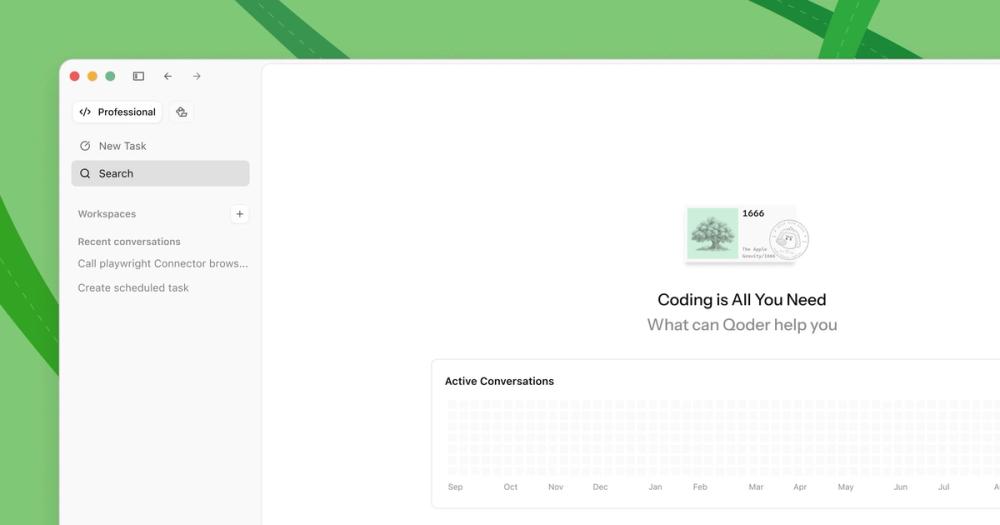
Qoder is an AI-powered autonomous development IDE that helps individuals and teams code faster and more efficiently.
TypeSafe AI offers System One Models for machine-native AI, focusing on calibrated decisions and cost-efficiency over traditional LLMs.
Memoh is a cloud-first multi-agent platform providing dedicated cloud computers for AI agents, ensuring 24/7 operation and seamless integration.
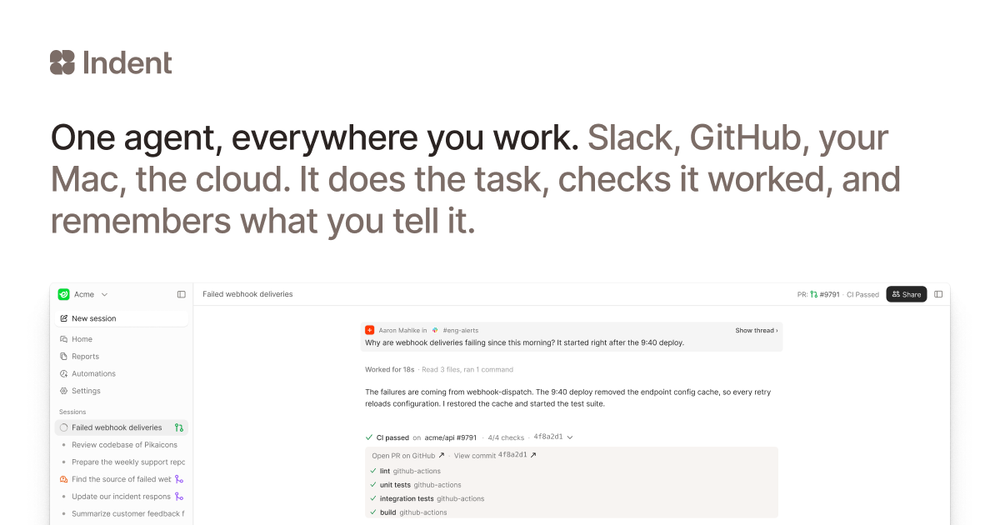
Indent is an AI coworker that automates tasks across your company, learning from one person and benefiting all. Integrates with Slack and code.
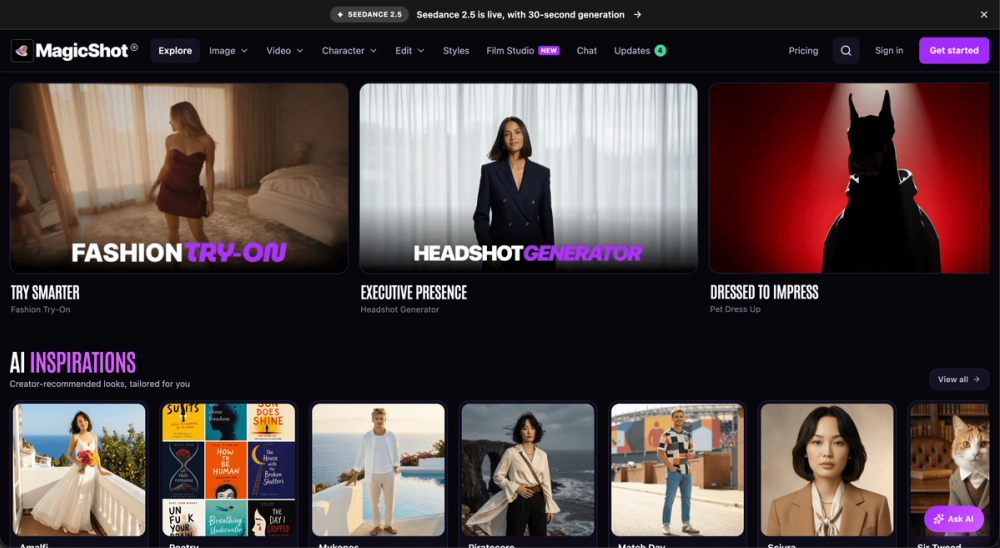
MagicShot: All-in-one AI studio for image, video, and audio creation. Simplify your content workflow.
Factory is an agent-native software development platform designed to accelerate the engineering lifecycle. By utilizing "Droids"—autonomous AI coding agents—Factory allows developers to delegate complex tasks such as refactoring, incident response, and large-scale migrations without leaving their preferred tools. It is built to integrate seamlessly into the modern developer's workflow, from the local IDE to the CI/CD pipeline.
What are Factory Droids? Droids are autonomous AI agents specifically designed for software development tasks like coding, testing, and deployment automation.
Do I need to switch my IDE to use Factory? No, Factory is designed to be agent-native and works within your existing tools like VS Code, JetBrains, Vim, and the terminal.
Is my code secure with Factory? Yes, Factory employs state-of-the-art security protocols and integrates with security platforms like Palo Alto Networks to protect your data and IP.
Can Droids handle project management tasks? Yes, Droids can be triggered by issue assignments or mentions in tools like Linear to pull context and implement solutions automatically.
What models does Factory support? Factory is vendor-agnostic, meaning it can work with various model providers and dev tooling as your stack matures.